Extreme weather exposes weaknesses that ordinary lighting tests often miss. Heavy rain, freezing spray, dust, salt air, and hurricane-force winds can damage fixtures, drivers, controls, and electrical connections. The right system must keep roads, entrances, work areas, and emergency routes visible when conditions become dangerous. Brightness alone is not enough.
So, which lighting systems work best in extreme weather? The strongest candidates usually combine sealed LED fixtures, high ingress protection, impact-resistant lenses, corrosion-resistant housings, and surge protection. Remote monitoring can reveal overheating or failed circuits before darkness becomes a safety problem. Battery-backed controls also help during grid interruptions. Small details matter. Gaskets matter.
Lighting engineer James R. Benya emphasizes this principle: “Good lighting design begins with understanding the environment, not merely choosing brighter lamps.” That advice remains practical for coastal facilities, mountain roads, flood-prone sites, and industrial yards. A fixture rated IP66 may resist powerful water jets, but installation quality still decides its real performance. Poor cable glands can defeat excellent hardware. I have seen specifications look impressive while exposed connectors quietly invite corrosion.
This guide compares lighting systems for the 2026 extreme-weather market. It considers weather sealing, thermal performance, wind resistance, service life, controls, and maintenance access. No product is perfect. A system that performs well in a desert may struggle beside ocean spray. Local climate data, mounting conditions, and backup requirements should shape the final choice. Test the details. Expect trade-offs.
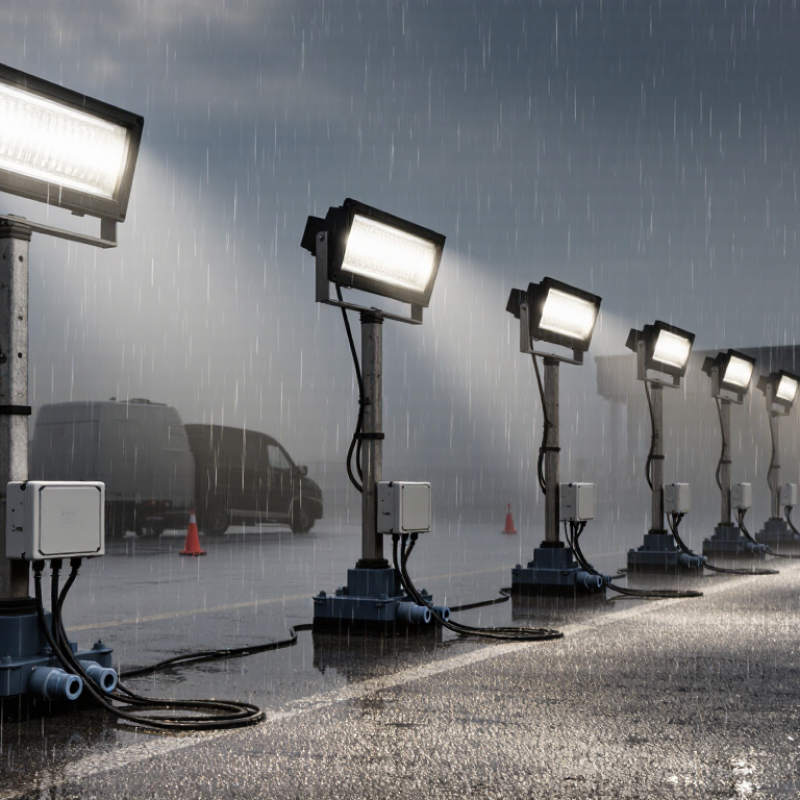
What makes a lighting system suitable for extreme weather? It must resist water, dust, impact, heat, cold, corrosion, and electrical surges. An IP66 enclosure is dust-tight and resists powerful water jets. IP67 adds temporary immersion protection, under IEC 60529 testing conditions. However, IP ratings do not measure wind pressure or impact strength. That gap matters.
NOAA recorded 27 billion-dollar weather and climate disasters in the United States during 2024. This figure shows why outdoor lighting needs more than attractive efficiency claims. Choose housings tested for impact, thermal cycling, salt exposure, and vibration. Check wind-load calculations against the project’s local structural requirements.
Surge protection should also follow recognized standards, such as IEC 61643-11. A sealed driver compartment helps, but seals can age. I would not treat laboratory ratings as permanent field performance.
Tips: Inspect gaskets twice yearly. Remove trapped water and salt deposits. Confirm that mounting hardware resists corrosion. Keep a record of failures, temperature, and storm conditions. This evidence improves future specifications. Select emergency lighting with independent backup testing, especially where evacuation routes may lose power. The U.S. Department of Energy’s 2023 outdoor lighting research continues to show the value of efficient solid-state systems, but efficiency alone is not durability. A cooler fixture can still fail after one poorly protected surge.
2026 Best Lighting Systems for Extreme Weather?
Key Technologies for Weather-Resistant Lighting Systems
Weather-resistant lighting starts with enclosure design. A certified IP66 or IP67 rating helps block dust, rain, and temporary water immersion. Strong housings also need impact protection for hail, flying debris, and maintenance accidents. In exposed coastal areas, powder-coated metals alone may not prevent corrosion. Proper seals, drainage paths, and corrosion-resistant fasteners matter more than appearance.
Thermal control is equally important. LED systems can fail early when heat remains trapped inside the housing. Look for aluminum heat sinks, pressure-equalizing vents, and materials rated for wide temperature changes. UV-stable lenses reduce yellowing under harsh sunlight. Surge protection helps manage lightning-related voltage spikes, especially on long outdoor cable runs. It should match the local electrical system and installation conditions.
Smart controls can improve reliability, but they need careful planning. Weather sensors may dim fixtures during storms or adjust output after snowfall. Remote monitoring can identify rising temperatures, moisture, or repeated power interruptions. I have found that simple alerts are often more useful than complicated dashboards. No enclosure stays perfect forever. Gaskets age, screws loosen, and tiny cracks may appear after repeated freezing. Regular inspection remains essential, even with high protection ratings. One weakness deserves more attention: laboratory testing cannot fully recreate years of wind, salt, ice, and maintenance errors.
Harsh environments demand more than bright fixtures. They require sealed construction, stable electronics, and serviceable components. The International Energy Agency reports that lighting consumes roughly 15% of global electricity. Efficiency matters, but failure prevention matters more during storms.
Sealed LED systems with IP66 or IP67 protection suit dust, wind-driven rain, and temporary flooding. Their solid-state design reduces lamp breakage and supports fast restart after power interruptions.
The U.S. Department of Energy states that LED products can use at least 75% less energy and last up to 25 times longer than incandescent lighting. In practice, poor heat dissipation can still shorten life. That detail is often missed.
Battery-backed emergency lighting should use cold-rated batteries, automatic testing, and protected charging circuits. For remote sites, solar-hybrid systems provide useful resilience, especially when grid access is unreliable. However, several cloudy days can expose their weakness. I would avoid solar-only designs near critical access routes without stored capacity.
Surge protection should follow IEC 61643-11, while enclosure selection should reference IEC 60529. NOAA recorded 27 U.S. billion-dollar weather and climate disasters in 2024, showing why redundant lighting deserves serious planning.
Field inspections should check cable glands, seals, mounting bolts, and drainage paths. Small defects become large failures.
Extreme-weather lighting should be selected by risk, not by brightness alone. The World Meteorological Organization reported that 2024 was the warmest year recorded, about 1.55°C above the pre-industrial average. NOAA also recorded 27 U.S. billion-dollar weather and climate disasters in 2024. These figures make old design assumptions less comfortable. Begin with a site hazard map. For flood-prone areas, choose luminaires tested for water ingress under IEC 60529. IP66 resists powerful water jets; IP67 adds temporary immersion protection. Neither rating guarantees safe performance after dirty floodwater exposure. Check cable glands, mounting height, drainage, and post-storm inspection access.
Wind requires structural evidence. Ask for wind-load calculations, impact testing, and corrosion data, rather than trusting a higher lumen figure. Coastal installations need salt-spray testing and stainless mounting hardware. Wildfire regions need sealed enclosures, cleanable lenses, and low-temperature-rated drivers. Smoke deposits can reduce useful light quickly. That detail is often missed.
Temperature also changes battery behavior. Emergency systems should verify battery capacity across the site’s real temperature range. NFPA 101 addresses emergency lighting performance and testing, but local approval requirements still matter. Surge protection should match the electrical system and grounding design. A protection device without proper bonding is not a complete solution. Review independent test reports, maintenance records, and replacement access before purchase. I would reject any proposal that promises “all-weather” performance without naming the tested conditions. That phrase sounds reassuring, but it is technically incomplete.
How to choose lighting protection for specific extreme weather risks
The chart uses the IEC 60529 ingress-protection scale as a selection baseline. Solid-particle protection ranges from 0–6, while liquid-protection levels range from 0–9. IP6X indicates dust-tight construction; IPX6 protects against powerful water jets; and IPX7 addresses temporary immersion. Flooding, salt exposure, freezing, wind loads, impact resistance, and corrosion may require additional project-specific testing beyond the IP rating.
Severe weather changes how lighting should be installed, inspected, and operated. NOAA’s 2024 Billion-Dollar Weather and Climate Disasters report recorded 27 major U.S. events, showing why outdoor systems need stronger planning.
Choose fixtures with suitable IP ratings, such as IP66 or IP67, for exposed locations. Confirm wind-load requirements before mounting equipment on poles, walls, or rooftops. A qualified electrician should verify grounding, cable protection, and surge control.
Small installation shortcuts can become dangerous during flooding or high winds.
Maintenance must continue after installation. NFPA research identifies electrical distribution and lighting equipment as significant contributors to structure fires.
Inspect seals, brackets, cable entries, and connection boxes before each severe-weather season. Look for cracked lenses, loose fasteners, corrosion, and water marks. Test emergency lighting and residual-current protection according to local requirements. Keep drainage paths clear. It is easy to overlook them.
During storms, isolate damaged circuits and keep people away from flooded electrical areas. Never touch a wet fixture before power isolation is confirmed.
After the storm, do not rely on appearance alone; insulation and surge damage may remain hidden. Infrared inspection can reveal abnormal heating, though it is not a complete safety test.
I have seen maintenance plans focus too heavily on brightness and too little on failure conditions. That needs reconsideration. NOAA’s climate disaster data makes the risk difficult to dismiss, but every site still requires a location-specific assessment.
It should resist water, dust, impact, heat, cold, corrosion, vibration, and electrical surges. Appearance alone proves little.
IP66 blocks dust and powerful water jets. IP67 also allows temporary immersion under controlled testing conditions.
No. IP ratings do not measure wind pressure or impact strength. Check separate structural and impact testing.
Use strong housings, reliable seals, drainage paths, corrosion-resistant fasteners, and UV-stable lenses. Small defects matter.
Choose aluminum heat sinks, pressure-equalizing vents, and components rated for wide temperature changes. Trapped heat can shorten service life.
Long outdoor cables can carry lightning-related voltage spikes. Proper surge protection helps protect drivers and connected circuits.
They are useful but not essential. Simple alerts can reveal moisture, rising temperatures, or repeated power interruptions.
Inspect gaskets twice yearly. Remove trapped water and salt deposits. Check cable glands, mounting bolts, and drainage paths.
It can support remote sites, but several cloudy days may reduce output. Include stored capacity for critical routes.
No. Gaskets age, screws loosen, and freezing can create tiny cracks. Field records and inspections remain necessary.
Choosing the right lighting system for extreme weather requires more than brightness alone. A suitable system should resist water, dust, corrosion, high winds, temperature changes, vibration, and impact while maintaining reliable performance. Key technologies may include sealed housings, durable materials, strong mounting systems, surge protection, thermal management, backup power, and smart monitoring. Different environments call for different solutions: flood-resistant fixtures for heavy rain, corrosion-resistant systems for coastal areas, low-temperature equipment for freezing climates, and reinforced lighting for regions affected by storms or airborne debris.
To determine which lighting systems work best in extreme weather, assess the specific risks at the installation site, expected operating temperatures, exposure to moisture and salt, maintenance access, and emergency lighting needs. Proper installation is equally important, including secure anchoring, protected wiring, effective drainage, and compliance with applicable safety requirements. Regular inspections, cleaning, testing, and timely replacement of damaged components help preserve performance and reduce hazards during severe weather events.
Agonex Safety