2026 Top Lighting for Accident Prevention What Is Its Role?

Time:2026-09-17 Author:Madeline
0%

When people ask, “what is the role of lighting in accident prevention,” the answer begins with visibility. Good lighting reveals uneven floors, wet surfaces, vehicle paths, warning signs, and people moving nearby. It also gives workers time to react before a minor hazard becomes a serious incident.

Peter Boyce, author of Human Factors in Lighting, has stated, “Lighting is a means to an end, not an end in itself.” His observation matters in 2026, because accident-prevention lighting should serve real human behavior. Brightness alone is not enough. A poorly positioned lamp can create glare, deep shadows, or reflections on polished floors. Those details can hide hazards rather than expose them.

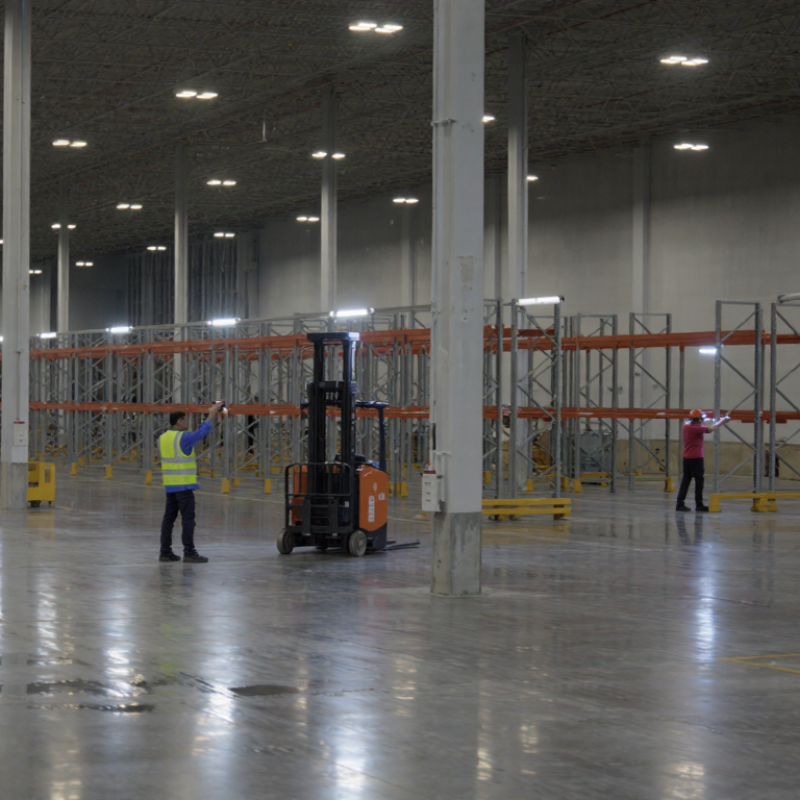
The best systems match lighting levels to the task, location, and movement pattern. Stairways need clear step edges. Warehouses need controlled illumination around racks and loading zones. Outdoor paths need consistent light without blinding pedestrians or drivers. Emergency lighting must remain dependable when normal power fails.

Small details matter.

From practical safety inspections, one lesson appears repeatedly: workers notice lighting problems before management does. They mention flickering fixtures, dark corners, and uncomfortable glare. Their experience deserves attention. Still, lighting cannot prevent every accident. Housekeeping, training, equipment design, and supervision remain essential.

A useful review should therefore ask simple questions. Can people see the next step? Can they recognize a hazard quickly? Does the light guide attention without causing distraction?

The answers may expose weaknesses. That is valuable. Effective lighting design is not perfect by default; it improves through observation, measurement, and honest reassessment.
2026 Top Lighting for Accident Prevention What Is Its Role?

2026 Accident-Prevention Lighting: Hazards, Users, and Safety Evidence

Accident-prevention lighting is not simply about making a space brighter. It must reveal hazards, movement, and changing depth. Poorly lit stairs can hide a worn edge, while glare can blind a forklift operator for several seconds. The users matter: pedestrians need facial and surface visibility, warehouse staff need clear aisle contrast, and older workers often need more light for safe movement.

Evidence supports careful design, but it is not perfect. A Cochrane review of street-lighting studies reported a possible 32% reduction in nighttime crashes after lighting improvements. However, the review rated the evidence as limited, so lighting alone cannot prove safety. The U.S. Occupational Safety and Health Administration recorded 395 fatal construction falls in 2022, showing why stairwells, platforms, and temporary work areas deserve focused inspection.

Small details matter. Uniform illumination helps users detect a box left across an aisle. Shielded fixtures can reduce glare near loading bays. Motion controls may save energy, yet delayed activation can create dangerous dark zones. The UK Health and Safety Executive reported 561,000 non-fatal workplace injuries in 2023/24; lighting was not the sole cause, but visibility can influence slips, collisions, and reporting decisions. My field experience suggests that many lighting audits stop at lux readings. That is a weakness. Test real routes at eye level, during shift changes, in rain, and under partial failure. Safety evidence should include worker feedback, near-miss records, and measured visibility, not brightness alone.

Measure Safety with Illuminance, Uniformity, Glare, and Flicker Metrics

2026 Top Lighting for Accident Prevention: What Is Its Role?

Accident prevention starts with measurable visibility, not brightness alone. EN 12464-1:2021 commonly specifies 500 lux for detailed indoor work and 300 lux for many circulation areas. These values are useful references, not universal answers. A warehouse aisle may need clear vertical illumination, especially around shelf edges and moving equipment. The IES Lighting Handbook also stresses task illuminance, contrast, and visual adaptation. In practical audits, uneven light often creates darker steps, corners, and floor obstacles.

Uniformity should be checked beside average illuminance. A strong average can hide hazardous shadows. Many workplace designs use a minimum-to-average uniformity ratio near 0.4 to 0.6, depending on the task and environment. Glare deserves equal attention. CIE 117:1995 defines the Unified Glare Rating method, while EN 12464-1 often uses UGR 19 for demanding office tasks. Excessive glare can make a wet floor disappear visually. It can also delay hazard recognition. Perfect lighting is rare. Reflections from polished surfaces still challenge experienced installers.

Tips: Measure at eye level and on the working plane. Record average, minimum, uniformity, UGR, and flicker percentage. IEEE 1789-2015 links flicker risk with modulation depth and frequency, so “flicker-free” should not be accepted without test data. Check lighting during startup, cleaning, and night shifts. Human feedback matters. One overlooked complaint may reveal the real risk.

Apply EN 12464-1:2021 Targets: 500 lx Offices and 300 lx Corridors

Effective lighting reduces accident risk by helping people see obstacles, floor changes, doors, and warning signs before moving into danger. Under EN 12464-1:2021 targets, offices should receive 500 lx, while corridors should receive 300 lx. These levels support clearer visual tasks and safer movement.

Measurements should be taken at working surfaces and along walking routes, not only near light fittings. A corridor may meet 300 lx in one area yet remain unsafe near a shadowed corner. Uniform distribution matters. Glare also needs control, especially beside glossy floors, screens, and glass doors. Good colour rendering can make stains, steps, and surface damage easier to notice.

Maintenance is part of accident prevention. Dust, ageing lamps, and failed controls gradually reduce performance. Keep records of lux readings, cleaning dates, and replacement work. Emergency lighting requires separate checks and clear access. A brighter room is not automatically safer. I have seen layouts where high output created glare and hidden edges. That weakness deserves honest review. Lighting design should be checked with real users, changing daylight, and typical movement patterns.

2026 Top Lighting for Accident Prevention: What Is Its Role? — Apply EN 12464-1:2021 Targets: 500 lx Offices and 300 lx Corridors

Maintained illuminance values are project targets. Final lighting design and compliance should be verified against the applicable room function, national regulations, and the current EN 12464-1:2021 requirements.
Area or Lighting Dimension Target / Criterion Accident-Prevention Role Recommended Verification Method
Office work areas 500 lx maintained illuminance Improves visibility of documents, screens, obstacles, edges, and hand movements during routine work. Measure horizontal illuminance across a representative grid on the working plane; account for maintenance factor.
Office illuminance uniformity U0 ≥ 0.60 Reduces abrupt bright and dark zones that can hide trip hazards or delay visual adaptation. Calculate minimum illuminance divided by average illuminance over the specified task area.
Office glare control UGRL ≤ 19 Limits discomfort glare that can distract occupants, reduce contrast, or obscure hazards. Check the Unified Glare Rating for the room geometry, luminaire layout, reflectances, and observer positions.
Corridors and circulation routes 300 lx maintained illuminance Enhances recognition of floor level changes, wet areas, doors, carts, people, and other moving obstacles. Measure on the route’s reference plane, including intersections, doorways, stairs, and changes in direction.
Corridor illuminance uniformity U0 ≥ 0.40 Limits shadowed sections and improves continuous visual guidance along the route. Use a measurement grid along the full travel path and identify the lowest-lit locations.
Colour rendering Ra ≥ 80 Supports recognition of warning colours, surface contamination, skin tone changes, and visual signals. Confirm the installed light source’s declared general colour-rendering index and suitability for the task.
Colour appearance Typically 3,000–4,000 K for indoor work areas Provides a consistent visual environment and helps occupants distinguish surfaces and visual cues. Coordinate correlated colour temperature across adjacent spaces to avoid distracting colour shifts.
Stairs, ramps, and level changes At least the applicable route target, with extra attention to step edges Improves detection of risers, nosings, ramps, handrails, and changes in elevation. Measure each tread or critical surface and check that luminaire placement does not create confusing shadows.
Lighting flicker and stroboscopic effects Minimise through suitable drivers and controls Reduces visual discomfort and the risk that moving equipment appears stationary or moves irregularly. Assess luminaires under operating conditions, especially near rotating machinery and moving vehicles.
Emergency escape lighting Design to EN 1838 and applicable local safety rules Maintains route visibility during normal-supply failure and helps occupants reach exits safely. Test duration, switching time, illuminance, uniformity, signs, batteries, and escape-route coverage.
Maintenance and ageing Maintain the design target throughout service life Prevents gradual light loss from dirt, lamp ageing, surface degradation, and failed luminaires. Set a cleaning and inspection schedule, record lux measurements, and replace failed or degraded components promptly.

Use IES RP-8-22 Roadway Lighting for Visibility and Uniformity

Roadway lighting plays a practical role in accident prevention. It helps drivers detect curves, pedestrians, vehicles, and surface changes earlier. IES RP-8-22 provides guidance for designing lighting that supports visibility and uniformity. It is not a substitute for field judgment or local requirements.

Uniform lighting matters more than bright light alone. A road with harsh bright spots and deep shadows can hide a cyclist or stopped vehicle. Designers should review average illumination, uniformity ratios, glare, and visual adaptation. Intersections need special attention. Turning lanes, crossings, and merging areas often create sudden decisions. Clear sightlines help.

Real roads are rarely perfect. Wet pavement can reflect luminaires into a driver’s eyes. Trees may block light after installation. Aging equipment can reduce performance quietly. Regular inspections are essential. Measure the roadway, not just the design model. A technically compliant layout may still feel uncomfortable at night. That discomfort deserves investigation, not dismissal. Good practice also considers pedestrians, maintenance access, mounting height, and nearby properties. The aim is balanced visibility, with enough light to reveal hazards without creating distracting glare. Small design changes can matter: better spacing, controlled distribution, and cleaner transitions between lighted and darker sections.

Meet EN 1838 Emergency Lighting: 1 lx Escape Routes, 0.5 lx Open Areas

Emergency lighting helps people move when normal power fails. Under EN 1838, escape routes need at least 1 lx along the route centreline. Open areas need 0.5 lx at floor level. These figures support visibility, not comfort. People must still recognize doors, stairs, level changes, and obstacles.

In a corridor, a clear light path can reveal a fire door handle or a dropped bag. On a landing, poor placement may leave a stair edge in shadow. That small gap matters during smoke, noise, or panic. Luminaires should match the building layout, escape signs, and likely obstruction points. A calculation is useful. It is not the whole design.

Routine testing should check illumination, battery duration, charging faults, and damaged fittings. Records should identify dates, results, and corrective work. A common mistake is treating 1 lx or 0.5 lx as a target everywhere. These values describe minimum conditions in specific areas. Real sites can change after partitions, storage, or renovations. I would review the lighting after every significant alteration. Perfect assumptions rarely survive daily use.

2026 Top Lighting for Accident Prevention: What Is Its Role?

EN 1838 defines minimum emergency-lighting levels to support safe evacuation and reduce accident risks during power failures.

Minimum illuminance values under EN 1838: escape routes require 1 lx along the center line, open areas require 0.5 lx, and high-risk task areas require at least 15 lx or 10% of normal illuminance, whichever requirement is applicable.

FAQS

Why is uniform roadway lighting important?

Uniform light helps drivers see curves, pedestrians, vehicles, and surface changes. Bright spots alone are not enough. Deep shadows can hide a cyclist or stopped vehicle.

What areas need special attention on a lit road?

Intersections, turning lanes, crossings, and merging areas need careful review. Drivers make sudden decisions there. Clear sightlines reduce visual surprises.

Can a lighting design pass calculations but still feel unsafe?

Yes. A compliant layout may still create glare or uncomfortable transitions. Measure the real road. I would not trust the drawing alone.

How can wet pavement affect roadway lighting?

Wet pavement may reflect light directly into a driver’s eyes. This reflection can reduce visibility. Check the site during wet conditions when possible.

What problems can appear after roadway lights are installed?

Trees may block light, and aging equipment can quietly lose performance. Nearby construction may also change visibility. Regular inspections remain necessary.

What emergency lighting level is needed along escape routes?

Escape routes need at least 1 lux along the route centreline. This helps people identify doors, stairs, and obstacles during a power failure.

What emergency lighting level is needed in open areas?

Open areas need at least 0.5 lux at floor level. This supports movement and hazard recognition. It is not designed for comfort.

What should emergency lighting tests include?

Tests should check illumination, battery duration, charging faults, and damaged fittings. Records should include dates, results, and corrective actions. Small omissions matter.

Why should emergency lighting be reviewed after renovations?

Partitions, storage, and layout changes can block light or create new shadows. A calculation may become outdated. Daily use often exposes imperfect assumptions.

Conclusion

Accident-prevention lighting is not simply about making a space brighter; it is about helping people recognize hazards, judge distances, move confidently, and respond quickly in changing conditions. This article asks, “what is the role of lighting in accident prevention,” and explains how lighting supports offices, corridors, roads, industrial areas, and emergency routes. It examines the needs of different users, including pedestrians, drivers, workers, visitors, and people who may have reduced vision, while emphasizing practical safety evidence rather than appearance alone.

Safety can be evaluated through illuminance, uniformity, glare control, and flicker performance. The article also introduces key reference targets, including 500 lux for offices and 300 lux for corridors under EN 12464-1:2021, roadway visibility and uniformity principles from IES RP-8-22, and emergency-lighting levels of 1 lux on escape routes and 0.5 lux in open areas under EN 1838. Together, these measures provide a structured approach to reducing trips, collisions, confusion, and delayed evacuation.

Madeline

Madeline

Madeline is a dedicated marketing professional with a wealth of expertise in our company's core offerings. With a keen understanding of the industry, she brings a unique perspective to her role, consistently delivering high-quality content that highlights the superior aspects of our products. As......