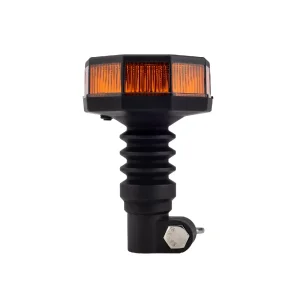
1. Market Landscape: Industrial Safety Signaling in Equatorial Guinea
As a major hydrocarbon producer in the Gulf of Guinea, Equatorial Guinea’s industrial sector is dominated by offshore and onshore petroleum extraction, natural gas processing, and maritime logistics. Facilities such as the Punta Europa LNG complex on Bioko Island, the Alba condensate field, and the deepwater Zafiro development demand strict adherence to international safety protocols. In these environments, reliable visual and audible signaling equipment is not merely a operational preference—it is a critical regulatory and life-safety requirement.
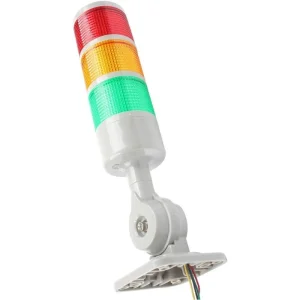
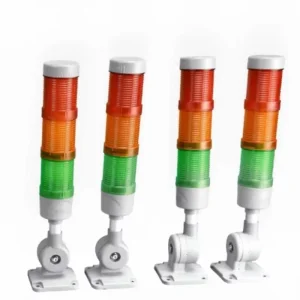
The local tropical maritime climate poses significant hardware challenges. Equipment deployed at the Port of Bata or offshore installations near Malabo is subjected to extreme relative humidity (often exceeding 90%), intense UV radiation, high saline concentration, and ambient heat. Under these conditions, standard consumer-grade signaling equipment suffers rapid corrosion, moisture ingress, and thermal degradation. Industrial operations require certified ruggedized beacons, high-decibel sirens, and multi-color indicator towers capable of continuous, maintenance-free operations.
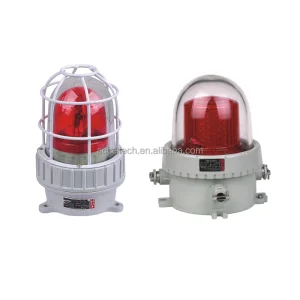
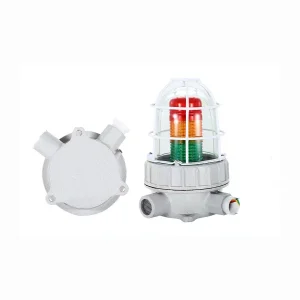
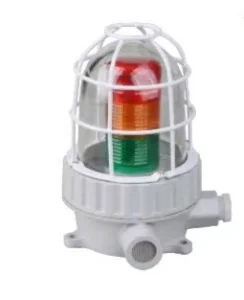
Explosion hazards are a constant risk in petrochemical refining, offshore drilling, and fuel storage facilities. To comply with the regulations set by the Ministry of Mines and Hydrocarbons (MMH) of Equatorial Guinea, operators must procure warning lights that meet international explosion-proof classifications. Our systems are manufactured to satisfy ATEX and IECEx standards for Zone 1 and Zone 2 gas atmospheres, as well as Zone 21 and Zone 22 dust atmospheres.
A critical consideration is the temperature rating (T-class). For areas processing light hydrocarbons, warning devices must have a low surface temperature rating (typically T6) to prevent the ignition of volatile gases. Furthermore, the construction must utilize copper-free aluminum housing and impact-resistant tempered glass or high-grade polycarbonate lenses that resist mechanical impact and direct exposure to petroleum hydrocarbons.
Ingress Protection (IP66/67/69K): Dust-tight housings capable of withstanding heavy sea spray and high-pressure washdowns on marine decks.
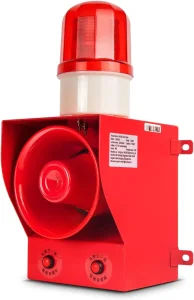
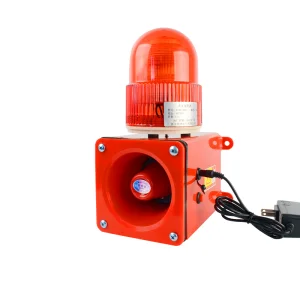
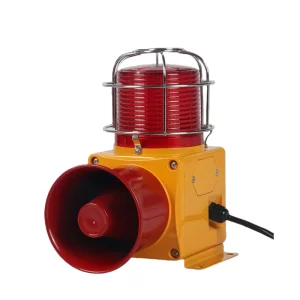
Acoustic Power Customization: Siren frequencies adjusted to cut through low-frequency noise generated by massive diesel generators and turbine packages.
High-Flux LED Tech: Ultra-bright solid-state illumination providing superior visibility in dense marine fog and equatorial heavy downpours.
Auxiliary Industrial Signaling Devices
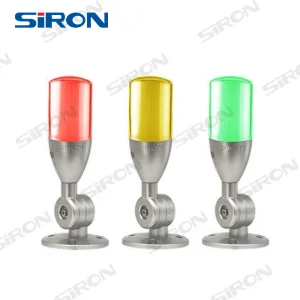
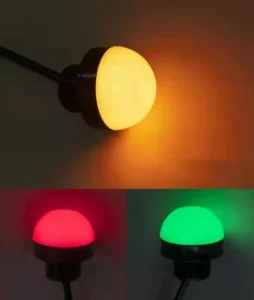
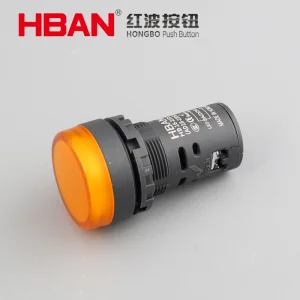
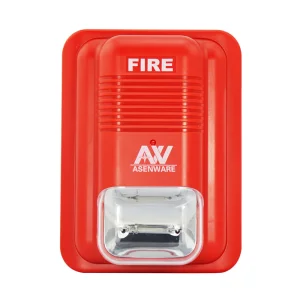
To ensure complete safety coverage, we maintain a comprehensive inventory of application-specific signaling components tailored for secondary machinery loops, panel controls, and hazardous-area dry rooms.
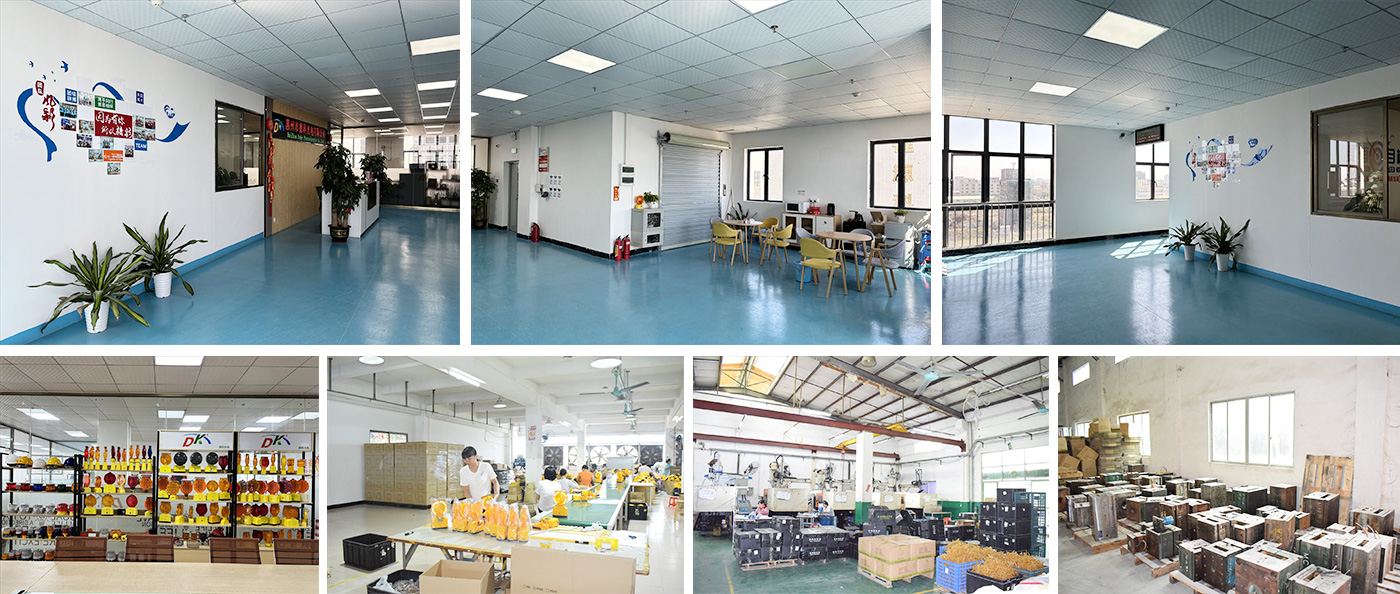
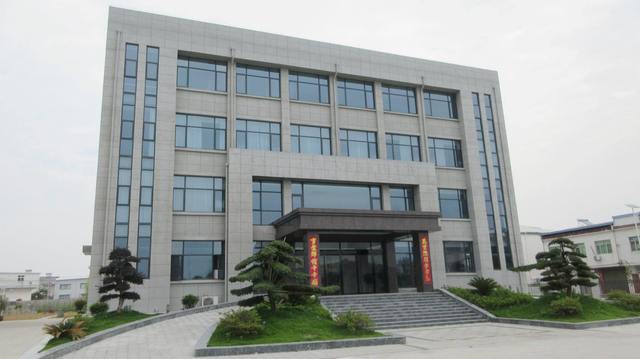
Founded in 2012, Dongguan Agonex Safety Co., Ltd. was established with the core mission of engineering innovative, energy-efficient, and highly durable safety signaling products for challenging environments worldwide. Our specialized portfolio spans from advanced solar-powered warning lights to high-impact construction safety helmets. These solutions are extensively deployed on traffic safety grids, marine installations, busy airports, and complex petrochemical hubs.
By utilizing advanced materials, specialized sealing techniques, and rigorous multi-stage quality assurance, our team guarantees consistent operational performance in environments where safety and reliability are non-negotiable. Our engineering experts work directly with international clients to customize visual and audible parameters to meet regional demands, including the complex standards of the West African maritime and mining sectors.
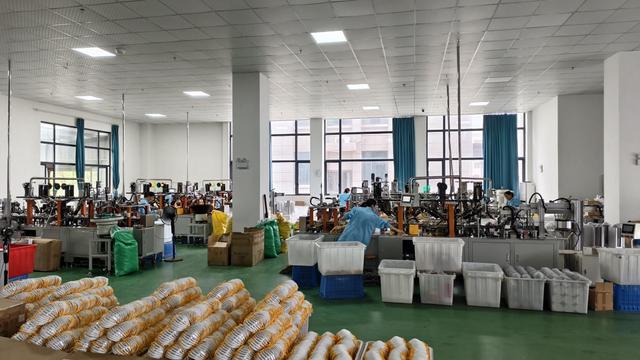
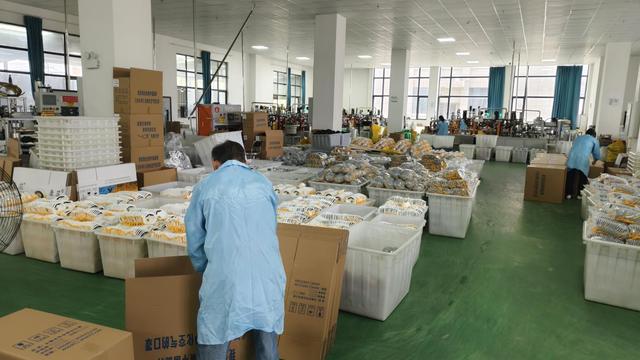
Our facility houses advanced testing infrastructure, including photometric integration spheres, environmental thermal-humidity cycling chambers, and acoustic pressure rooms. These capabilities allow us to simulate real-world conditions like those in the Gulf of Guinea, ensuring every product is ready for immediate field commissioning.
3. Technical Roadmap: The Evolution of Smart Industrial Signaling
Modern industrial automation requires safety systems that provide real-time diagnostic feedback. The industry is shifting from standalone incandescent flashers to addressable, network-connected LED signaling systems. These next-generation systems integrate directly with Distributed Control Systems (DCS) and Safety Instrumented Systems (SIS) via Modbus, Ethernet/IP, or wireless industrial protocols.
By adopting addressable systems, plant managers in Bata or Malabo can run automated self-tests on remote warning beacons, monitor current draw to predict LED driver degradation, and adjust decibel outputs remotely based on real-time ambient noise levels. This proactive monitoring reduces maintenance overheads and prevents signaling failures in hazardous oil and gas zones.
4. Frequently Asked Questions (FAQ)
What ATEX classifications are required for offshore platforms in Equatorial Guinea?
Most offshore platforms in the Gulf of Guinea specify Zone 1 certified signaling equipment for high-risk gas release areas (e.g., around wellheads, shale shakers, and production manifolds) and Zone 2 certifications for adjacent utility areas. Equipment must comply with ATEX/IECEx standards, showing clear marking of protective concepts such as Ex d (flameproof) or Ex ia (intrinsically safe).
How do marine-grade enclosures prevent corrosion in highly saline coastal environments?
Marine-grade enclosures use specialized materials such as copper-free aluminum, type 316 stainless steel, or impact-resistant polycarbonates with UV stabilizers. They feature double-lip gaskets, IP66/IP67 ingress ratings, and marine epoxy powder coatings (C5-M corrosion class) to prevent salt-fog penetration.
Can the visual frequency and light colors be customized to meet regional codes?
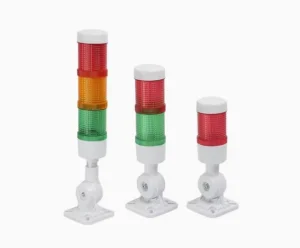
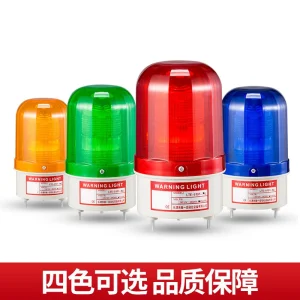
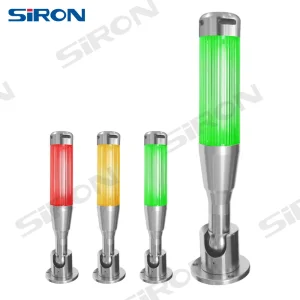
Yes, our industrial alarm towers and strobes support multi-stage color control (red, amber, green, blue, and clear/white). Users can configure flash frequencies (e.g., steady, 1Hz, 2Hz, or double-flash) to align with national safety policies and emergency response plans.
What is the typical operating voltage range of Agonex warning lights?
We provide multi-voltage capabilities to suit varying power grids. Devices can be ordered in 12-24VDC for battery-backed control loops, or 110VAC/220VAC (50/60Hz) for direct line power operations, with built-in surge and polarity protection.
 Agonex Safety